



5 Signs Your Valve assembly line machinery Needs Upgrading: Cost, Throughput and Quality Metrics
Time : Dec 20, 2025
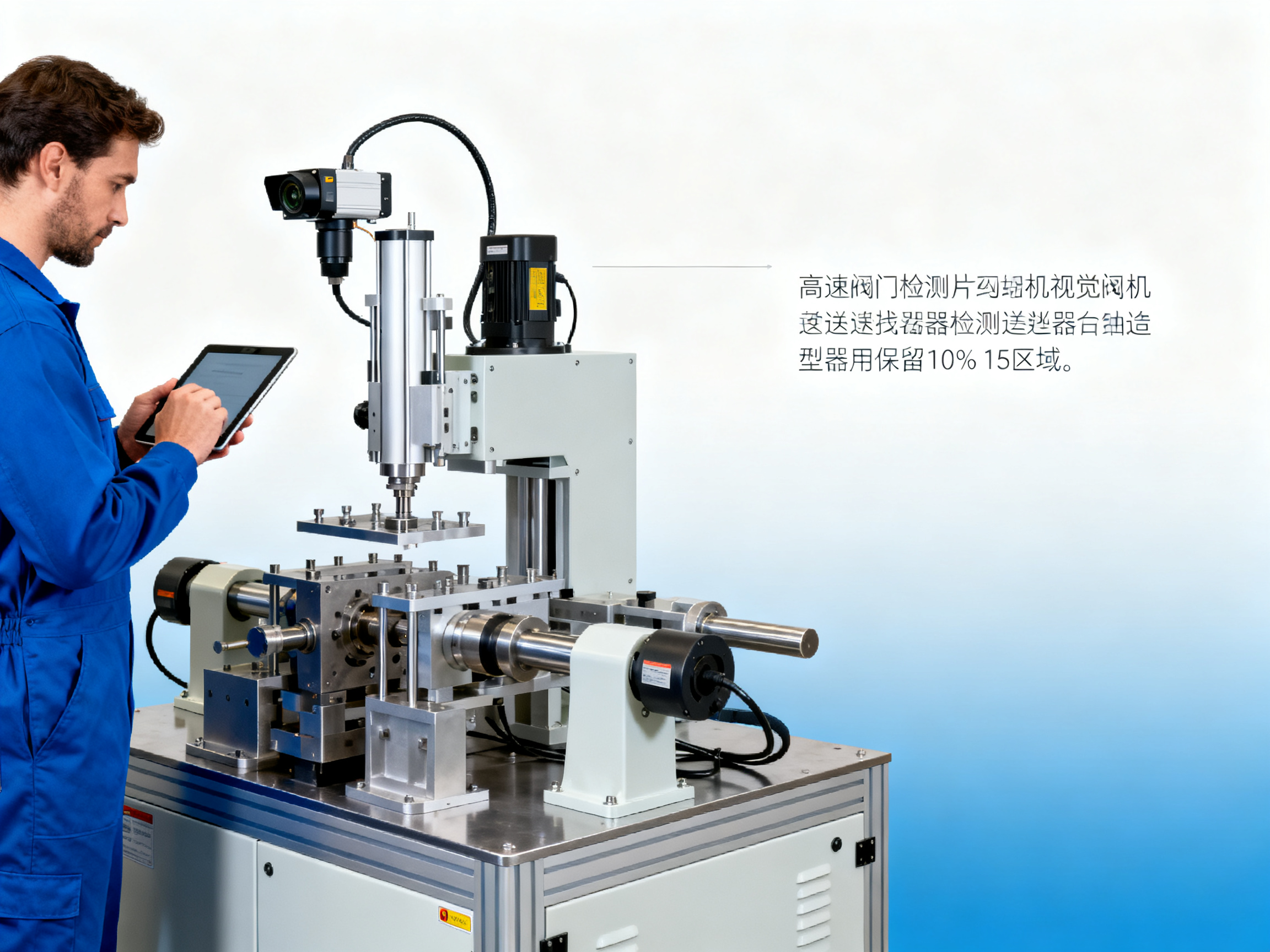
Is your valve assembly line machinery undermining margins, throughput or product quality? Procurement teams and enterprise decision-makers often face a familiar set of symptoms — rising unit costs, frequent line stoppages, spike in rejects and missed takt time — yet identifying whether the root cause is process, equipment age or poor integration takes measured analysis. This article highlights five clear signs that it is time to upgrade: escalating per-unit cost, repeated bottlenecks that limit throughput, sudden reject-rate increases that erode yield, maintenance load that distracts operations teams, and inability to meet takt time targets demanded by customers. We explain measurable metrics, cost-throughput comparisons and practical criteria to decide between retrofitting existing valve assembly line machinery and investing in new automated solutions such as a Valve core automatic assembly machine, High-speed valve assembly machines or a Valve switch assembly machine.
Definition & Market Overview
Definition: A Valve core automatic assembly machine and related Automated valve assembly equipment are engineered platforms that automate the sequential operations required to assemble solenoid valves, valve switches and related components. Valve assembly automation replaces manual handling and semi-automatic steps with synchronized feeders, vision inspection, servo-driven assemblies and integrated quality checks. In recent years, market demand has shifted from basic Automatic valve assembly machines to solutions that combine speed with inline inspection and data capture, because buyers require traceability, lower total cost of ownership (TCO) and faster payback.Market Overview: The automation market for valve assembly lines has grown steadily as end markets — HVAC, automotive actuators, pneumatic controls and small appliance valves — demand higher consistency and tighter tolerances. Suppliers that provide customizable valve assembly line machinery, including Valve core automatic assembly machine configurations, gain traction with procurement teams because they reduce labor variability and enable predictable throughput. Global trends emphasize modularity, interoperability with MES and PLC systems, and compliance with standards such as ISO 9001 for quality systems and CE marking for European markets. For procurement managers evaluating Automated valve assembly equipment, consider not only rated throughput but also data integration capabilities, mean time between failures (MTBF), and ease of spare parts sourcing. With ports nearby in Ningbo and Shanghai, manufacturers like Yuyao Zhiheng Automation Equipment Co.,Ltd are positioned to offer competitive lead times and export-ready compliance documentation for Europe, South America, the Middle East and Southeast Asia, making their Valve assembly automation solutions attractive for global supply chains.
Technical Performance & Procurement Guide
Technical Performance: When evaluating High-speed valve assembly machines or a Valve switch assembly machine, key metrics include takt time alignment, throughput (units per minute or hour), first-pass yield (FPY), reject rate, and OEE (Overall Equipment Effectiveness). For example, a modern Valve core automatic assembly machine can reduce cycle time by 30% to 60% versus manual lines while raising FPY from typical 92% to above 98% through integrated vision inspection and automated sealing ring placement. Equipment specification should list servo axis counts, feeder capacities, vibration isolation, and allowable component variability; it should also state qualification methods for critical features such as seat sealing and actuator torque.Procurement Guide: Decision-makers should weigh retrofit vs replacement by calculating payback and operational risk. A systematic procurement checklist includes: current line takt time and bottleneck stations; average reject rate and root-cause data; maintenance hours per week and spare part lead time; expected production growth over 1–3 years; integration needs for MES/ERP and traceability; and certification needs for target markets. Use a simple ROI model: incremental annual savings = (labor savings + lower scrap + higher throughput margin) — additional operating costs. Payback period = capital cost / incremental annual savings. For many clients, converting to an Automatic valve assembly machines setup reduces direct labor by 40–70% and compresses variability, delivering payback in 12–36 months depending on volume. For lower-volume product lines, Automated valve assembly equipment offered with modular stations lets you scale investment and keep flexibility. Additionally, ensure vendor support agreements include preventive maintenance plans and remote diagnostics so MTBF improvements are sustained.
Cost & Alternatives, Case Studies and Why Choose Us
Cost & Alternatives: Upgrading Valve assembly line machinery can take three routes: full replacement with High-speed valve assembly machines, retrofit of critical stations (vision, feeders, torque control), or hybrid approaches that combine existing conveyors with new modular stations. Full replacement offers the highest throughput and integrated data capture, but retrofit can be attractive when capital budgets are constrained or when the mechanical base remains serviceable. Typical cost drivers include the number of servo axes, custom tooling for specific valve geometries, inspection systems (2D/3D vision), and PLC/MES interfaces. When estimating lifecycle cost, include spare parts inventory, technician training, and downtime risk. Financing, leasing or vendor-driven pay-per-output models can de-risk the capital expenditure.Case Study (illustrative): A mid-size HVAC component manufacturer replaced three semi-automatic stations with a Valve core automatic assembly machine and integrated inline vision. After commissioning, throughput rose 45%, first-pass yield improved from 94% to 99%, and maintenance hours fell by 60% due to predictive diagnostics. The supplier provided CE-compliant documentation and local spare parts stocked near Ningbo port, enabling rapid service. Results included a payback of 18 months and reduced per-unit assembly cost by 28%. This kind of outcome is common when selecting proven Valve assembly automation from experienced manufacturers.Why Choose Yuyao Zhiheng Automation Equipment Co.,Ltd: Founded in 2010, Yuyao Zhiheng combines decade-plus experience in automation with a product line that includes Solenoid valve assembly machine, Sealing ring automatic assembly machine, Electric toothbrush automatic assembly machine, Automotive air conditioning fan door actuators assembly line, Automatic screwing machine, Automatic riveting contact machine and customized non-standard automated equipment. Located in Ningbo City near major ports, our technical team delivers tailor-made automation solutions that prioritize "Quality First, Integrity Foremost." We support CE and ISO-conforming documentation for export markets and offer post-sales technical support to ensure continuous performance of your Automatic valve assembly machines. If your procurement team needs a practical evaluation, contact us for a site audit, ROI model and a modular proposal that aligns with your takt time and quality targets. Reach out to begin a technical discussion and schedule a feasibility assessment today.
FAQ
▶ 5 Signs Your Valve assembly line machinery Needs Upgrading: Cost, Throughput and Quality Metrics
▶ How to Choose the Right Valve core automatic assembly machine in 2025: 7 Criteria for Procurement Managers
▶ High-Speed Lipstick Tube Filler Maintenance Guide: Ensure Long-Term Reliability
▶ What to Look for in a Reliable Lipstick Tube Capping Machine Supplier
▶ Key Factors to Consider When Investing in a Cosmetic Tube Filling Machine
▶ How to Choose the Best High-Speed Lipstick Tube Fillers for Your Production Line in 2026
Online Message
Thank you very much for writing to us. Please leave your message and contact information, we will reply to you within 24 hours.