



How to Choose the Right Valve core automatic assembly machine in 2025: 7 Criteria for Procurement Managers
Time : Dec 20, 2025
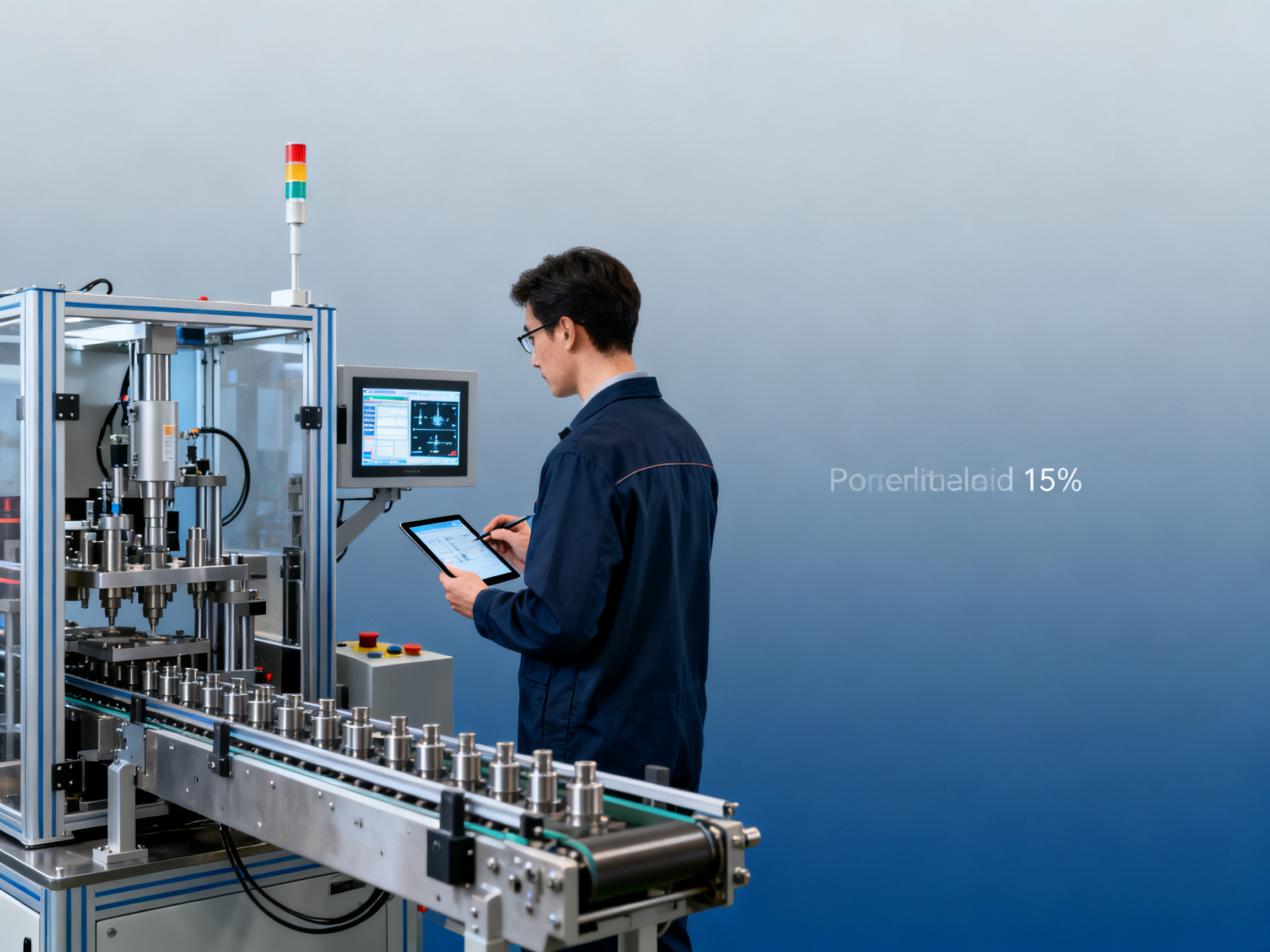
Choosing the right Valve core automatic assembly machine in 2025 is critical for procurement managers seeking higher throughput, consistent quality and lower TCO. This guide compares leading Automated valve assembly equipment and Valve assembly line machinery, from High-speed valve assembly machines to modular Valve switch assembly machine options, helping decision-makers evaluate performance, integration, maintenance and supplier support. With practical criteria focused on Valve assembly automation and scalable Automatic valve assembly machines, you’ll be able to select a solution that boosts productivity, ensures compliance and delivers fast ROI in modern automated production lines. Beyond throughput, procurement teams must evaluate accuracy, flexibility and after-sales service; a Valve core automatic assembly machine is not just a capital purchase, it is the backbone of process repeatability and cost control across production cycles. When comparing Automated valve assembly equipment, consider both the unit cycle time and the long-term stabilization of yield: enterprises that choose High-speed valve assembly machines without validated quality-control loops often experience volatile scrap rates that erode expected savings. Conversely, selecting a modular Valve switch assembly machine or customizable Automatic valve assembly machines that support quick changeovers reduces downtime and protects margins during product mix shifts. This opening overview sets the stage for concrete, actionable selection criteria. It also frames why modern Valve assembly line machinery must be specified with digital I/O, OPC-UA or industrial Ethernet connectivity, enabling real-time OEE monitoring and predictive maintenance. Procurement managers will read further to find seven procurement criteria tailored for buyers of Valve core automatic assembly machine solutions, along with technical performance metrics, compliance checkpoints, and a practical supplier evaluation checklist. Throughout this guide, keywords such as Valve core automatic assembly machine, Automated valve assembly equipment and Valve assembly automation will be used to highlight core capabilities and to assist buyers who research solutions online. The aim is to provide a clear, structured path from needs assessment to supplier negotiation so procurement decision-makers can secure Automatic valve assembly machines that align with throughput targets, quality standards and total cost objectives.
Definition & Overview
A Valve core automatic assembly machine is an engineered cell or integrated line designed to assemble valve cores, switches and related components with minimal human intervention. In practice, Automated valve assembly equipment ranges from compact benchtop stations to fully automated Valve assembly line machinery that combine feeding, press-fitting, ultrasonic sealing, screw-driving and vision inspection. High-speed valve assembly machines prioritize cycle time and often integrate rotary indexing, multi-head dispensing or parallel workstations to achieve high throughput. In contrast, a Valve switch assembly machine might focus on accurate micro-assembly and electrical contact optimization for switchable valve products. Understanding these distinctions helps procurement managers map production needs to available architectures. For instance, buyers targeting tens of thousands of units per shift typically pursue Automatic valve assembly machines with redundant tooling and automated quality gates; those producing smaller batches may favor modular solutions that emphasize quick retooling and flexible feeders. From an ROI perspective, the right Automated valve assembly equipment reduces labor variability, improves first-pass yield and shortens lead times for new SKUs. When specifying Valve assembly automation, include mandatory features such as tool change verification, torque traceability, and machine-state logging to meet modern traceability and audit requirements. On the supplier side, evaluate whether manufacturers supply turnkey Valve assembly line machinery or only core subassemblies; the difference affects integration cost and project timelines. Yuyao Zhiheng Automation Equipment Co.,Ltd is a manufacturer established in 2010 with a proven track record in Solenoid valve assembly machine, Sealing ring automatic assembly machine, Electric toothbrush automatic assembly machine, Automotive air conditioning fan door actuators assembly line, Automatic screwing machine, Automatic riveting contact machine and customized non-standard automated equipment. Their ability to tailor solutions across application scopes ensures that a Valve core automatic assembly machine or other Automatic valve assembly machines can be aligned with specific product geometries, material handling constraints and quality targets.
Market Overview & Trends
Global demand for valve-related automation continues to rise as manufacturers pursue higher efficiency and regulatory compliance. Market drivers include growth in automotive HVAC and hydraulics, increased adoption of pneumatic and solenoid valve systems in industrial automation, and the push for more energy-efficient fluid control components. Automated valve assembly equipment is being adopted faster in regions with mature manufacturing ecosystems, but there is also rapid uptake in Southeast Asia and Latin America where localized production reduces lead times and logistics risks. For procurement managers, this means an expanding pool of vendors and a wider range of Valve assembly line machinery options, including High-speed valve assembly machines optimized for specific valve families. The competitive landscape requires buyers to look beyond price: service network, local spare parts availability and proven export experience matter. Yuyao Zhiheng Automation Equipment Co.,Ltd, based in Ningbo City near Ningbo Port and Shanghai Port, has exported equipment to Europe, South America, the Middle East and Southeast Asian markets, which demonstrates familiarity with international shipping, customs and service expectations. Industry trends also emphasize connectivity—Valve assembly automation that supports Industry 4.0 protocols and cloud-based analytics offers measurable advantages in uptime and predictive maintenance. Another important trend is the adoption of flexible automation: automated valve assembly equipment that can switch between valve core variants or integrate sealing ring handling without extensive mechanical rework reduces total cost of ownership. Regulatory pressures and quality standards likewise shape procurement choices; buyers often require compliance with ISO 9001 quality systems, CE marking for machinery in the EU, and RoHS where applicable to electronic components within valve assemblies. In short, the market rewards suppliers who combine robust technical know-how, export experience and aftermarket support, enabling procurement teams to secure Automatic valve assembly machines that deliver both immediate capacity and long-term reliability.
Procurement Guide — 7 Criteria for Decision-Makers
When evaluating a Valve core automatic assembly machine, procurement managers should apply a structured scorecard based on seven criteria that capture both technical fit and commercial risk. Each criterion below is explained with recommended acceptance thresholds and questions to pose to suppliers of Valve assembly line machinery and Automated valve assembly equipment. 1) Throughput and Cycle Time: Define required output per shift and acceptable cycle time variability. For High-speed valve assembly machines, verify rated cycles per minute under load and validate with an on-site demonstration. Ask suppliers for OEE baselines and real-world yield data for similar products. 2) Assembly Accuracy & Quality Control: Inspect integrated vision systems, torque control, force monitoring and in-line leak/seal tests. Valve assembly automation should include statistical process control (SPC) outputs and traceability logs to meet quality audits. 3) Flexibility and Changeover Time: Quantify changeover steps and target a maximum changeover interval for mixed model production. Modular Valve switch assembly machine designs that permit quick fixture swaps reduce downtime and assist SKU proliferation. 4) Integration & Industry 4.0 Readiness: Request support for OPC-UA, MQTT or industrial Ethernet and ask for API documentation. Automatic valve assembly machines that provide standard digital interfaces reduce integration costs with MES and ERP. 5) Maintainability & Spare Parts Strategy: Review mean time to repair (MTTR), access to spare parts, and whether critical spares are stocked locally. Ask for preventative maintenance schedules and remote support tools. 6) Safety, Compliance & Certification: Validate CE, ISO 9001 certifications and adherence to machine safety standards such as ISO 12100 and relevant regional safety directives. For electronic subassemblies, check RoHS or IPC standards as applicable. 7) Supplier Capability & TCO: Evaluate the supplier’s project experience, warranty terms, commissioning process and total cost of ownership model. Yuyao Zhiheng Automation Equipment Co.,Ltd combines a professional technical team with rich automation experience and a record of customized non-standard automated equipment, which can shorten development time and reduce integration risk. Procurement teams should score proposals on lifecycle cost, not just capital expenditure, and require acceptance testing protocols and performance guarantees for any Automatic valve assembly machines purchased.
Technical Performance, Case Study & Contact
Technical performance specifications to request from suppliers include cycle time ranges, repeatability (e.g., ±0.02 mm), torque accuracy, traceable torque/force logs, vision resolution, and environmental tolerances. For valve cores and valve switch assemblies, material handling accuracy and contamination control are essential; specify clean feeding systems, vibratory or bowl feeder details, and reject mechanisms. A practical case study: a medium-sized HVAC supplier replaced semi-manual assembly with a compact Automatic valve assembly machines line and realized a 45% reduction in labor cost, 30% improvement in first-pass yield, and paid back the capital investment within 18 months. The selected Automated valve assembly equipment included modular workstations that allowed incremental expansion and integrated valve assembly automation that fed production data into the plant MES for real-time KPI monitoring. That project underscores the value of partnering with a supplier that offers both product engineering and in-field commissioning. Yuyao Zhiheng Automation Equipment Co.,Ltd has successfully delivered Solenoid valve assembly machine solutions and customized assembly lines with export experience and a commitment to "Quality First, Integrity Foremost." Why choose us? We provide tailored automation solutions, experienced technical support, proximity to major ports for efficient logistics, and proven export track records across Europe, South America, the Middle East and Southeast Asia. If you are a procurement manager or enterprise decision-maker evaluating Automatic valve assembly machines, contact us to request a capability presentation, factory acceptance test (FAT) plan, and references from similar projects. Early engagement helps align specifications, reduce change-orders and accelerate time-to-production. Reach out to arrange a detailed consultation and see how the right Valve core automatic assembly machine can improve throughput, ensure compliance and lower your TCO.
FAQ
▶ 5 Signs Your Valve assembly line machinery Needs Upgrading: Cost, Throughput and Quality Metrics
▶ How to Choose the Right Valve core automatic assembly machine in 2025: 7 Criteria for Procurement Managers
▶ High-Speed Lipstick Tube Filler Maintenance Guide: Ensure Long-Term Reliability
▶ What to Look for in a Reliable Lipstick Tube Capping Machine Supplier
▶ Key Factors to Consider When Investing in a Cosmetic Tube Filling Machine
▶ How to Choose the Best High-Speed Lipstick Tube Fillers for Your Production Line in 2026
Online Message
Thank you very much for writing to us. Please leave your message and contact information, we will reply to you within 24 hours.