



Automated valve assembly equipment vs Manual Lines: ROI and Payback Period Analysis for Manufacturers (2025)
Time : Dec 20, 2025
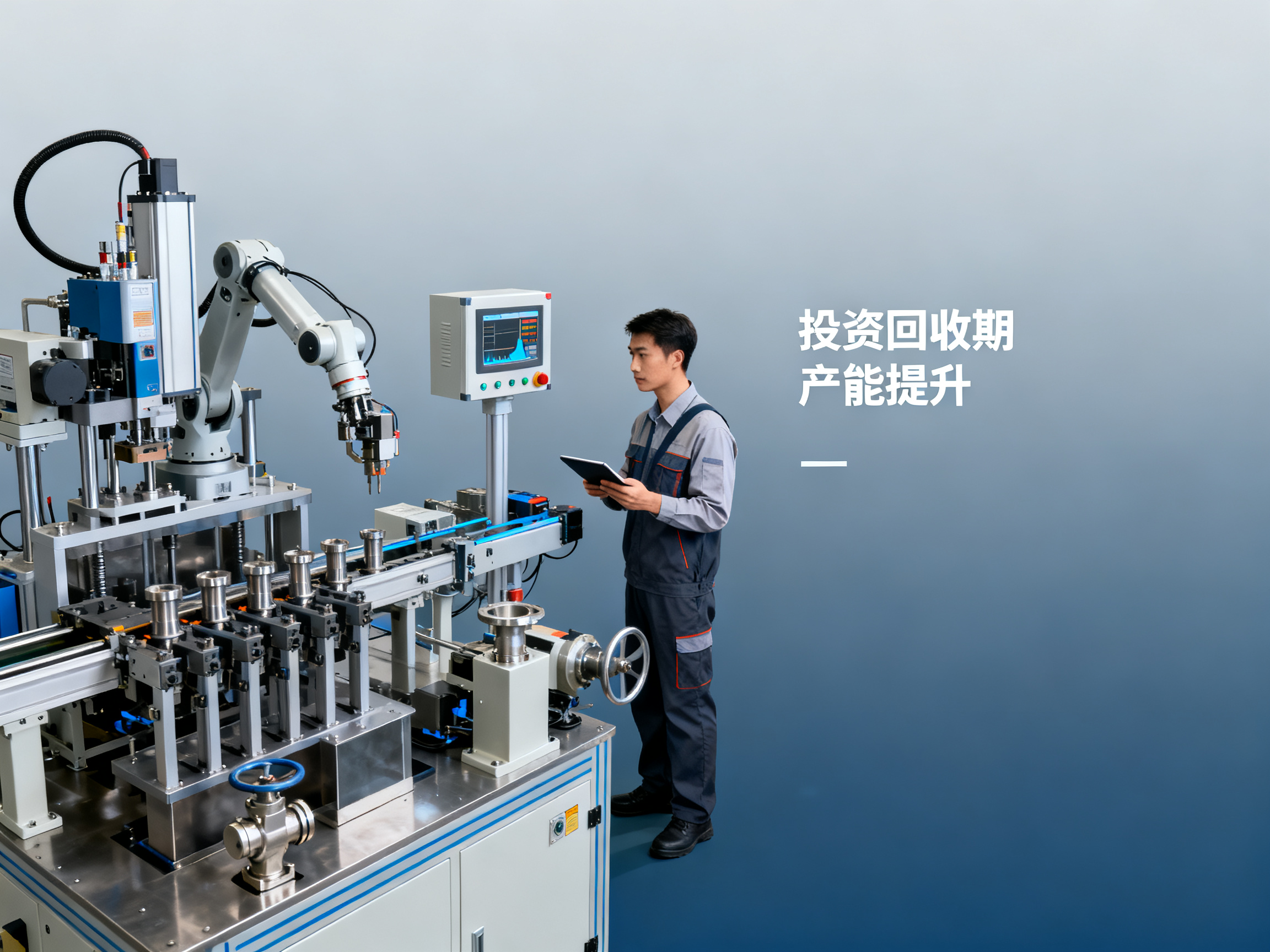
Procurement professionals and manufacturing decision-makers evaluating Automated valve assembly equipment versus manual lines need clear, data-driven insight into ROI and payback period for 2025 upgrades. This analysis examines how Valve core automatic assembly machine and Valve switch assembly machine options—alongside Valve assembly line machinery like High-speed valve assembly machines and other Automatic valve assembly machines—impact labor costs, throughput, defect rates, and total cost of ownership. Use this guide to compare Valve assembly automation benefits, calculate realistic payback timelines, and make informed investment decisions that align with production goals. In practical terms, buyers should consider not only purchase price but also installation time, training, spare parts, integration with MES/ERP, and expected improvement in yield. An automated valve assembly solution can reduce direct manual touchpoints, shorten cycle times, and stabilize quality across shifts. Yet, a clear ROI assessment must weigh labor arbitrage, takt time improvements, reductions in rework, and energy consumption. This introduction frames the topics covered below: definitions and scope of Valve assembly automation, market and trend context for 2025, a side-by-side comparison of Automated valve assembly equipment versus manual lines focused on payback period and net present value, and a procurement guide that helps sourcing teams choose the right Valve assembly line machinery and Valve core automatic assembly machine for their product mix. Throughout the piece, we reference typical performance ranges for High-speed valve assembly machines, real-world defect-rate reductions from automation, and the kinds of metrics procurement leaders should collect before signing a purchase order. While numbers vary by region and product complexity, the structured approach in the following sections enables manufacturers to run comparable scenarios, test sensitivity to labor and uptime assumptions, and choose between staged automation (semi-automatic equipment) and full turnkey Valve assembly automation.
Definition & Market Overview
Definition: Valve assembly automation refers to the set of machines and integrated lines—such as a Valve core automatic assembly machine, Valve switch assembly machine and other Valve assembly line machinery—that perform repetitive assembly tasks for valve components. Automated valve assembly equipment often includes part feeding, alignment stations, ultrasonic or adhesive sealing, automated screwing, inspection vision systems, and in-line testing. These elements combine to create consistent throughput and traceable quality records. Market Overview: In 2025 the demand for Automatic valve assembly machines is driven by stricter quality expectations for solenoid valves, HVAC actuators, and automotive vacuum valves. Manufacturers increasingly favor High-speed valve assembly machines where cycle time and footprint constraints are primary drivers. Procurement teams are responding to supply chain pressures and labor availability by prioritizing systems that reduce per-unit labor content and lower variability. Across industrial regions, the cost delta between manual lines and Automated valve assembly equipment is narrowing as vendors offer modular, scalable Valve assembly automation platforms that can be retrofitted onto existing lines. Key metrics influencing buyer decisions include units per hour, first-pass yield, mean time between failures (MTBF), and integration cost with traceability systems. Regulatory and market signals—such as customer-required failure rates, RoHS compliance for electronic components in electric actuators, and automotive PPAP expectations—also push adoption. For procurement and decision-makers, it is critical to benchmark candidate Valve assembly line machinery not only on headline throughput but on total cost of ownership over a 3–7 year horizon. Comparing incremental capital expenditure to projected savings in labor, rework, and warranty claims yields realistic payback periods. Suppliers now present case-based ROI models emphasizing the Valve core automatic assembly machine and Automatic valve assembly machines, with data on labor-hours saved, reduction in defect escapes, and predicted payback intervals under conservative shift-coverage assumptions. This market context sets the stage for comparison analysis and specific ROI calculations in the next section.
Comparison Analysis: Manual Lines vs Automated Valve Assembly Equipment
High-level comparison: Manual lines remain attractive for very low volumes, rapid product iteration, and when capex budgets are constrained. However, Automated valve assembly equipment excels when production volumes increase, quality requirements tighten, or labor volatility is a concern. In practice, a Valve switch assembly machine or a High-speed valve assembly machines array can reduce touch labor by 60–90% and improve first-pass yield by 3–10 percentage points, depending on complexity. Key comparison axes: throughput (units/hour), labor cost per part, defect and rework rates, uptime, and flexibility for product variants. Cost modelling example: to illustrate ROI and payback period, use a simple 3-year cash flow model comparing a manual line to an automated solution. Below is a compact, illustrative table comparing a representative manual line to an automated Valve core automatic assembly machine cell. The table assumes local labor rates, one-shift operation, and conservative uptime for automation (85%).
Interpretation and sensitivity: The payback window for Valve assembly automation is highly sensitive to local labor cost, number of shifts, and product mix complexity. For example, where labor cost exceeds $8–10/hour and the line runs two or more shifts, Automated valve assembly equipment typically pays back faster—often within 12–18 months—because the fixed-capex is spread over more units. If volume is low, a staged approach (introducing Automatic valve assembly machines for bottleneck stations) reduces initial capex and still captures yield gains. When estimating ROI, include avoided costs such as lower warranty claims from improved first-pass yield, reduced scrap, and lower training overhead. Also incorporate spare parts and service contracts; a Valve assembly line machinery supplier offering remote diagnostic features and predictable service plans will often improve uptime and shrink the effective payback period.
Procurement Guide, Case Study & Why Choose Us
Procurement checklist: When evaluating vendors for a Valve switch assembly machine or a broader Valve assembly automation program, procurement teams should request: 1) a full TCO model (3–5 years) with conservative uptime assumptions; 2) references and case studies showing similar product families; 3) a validation plan for process capability (Cp/Cpk); 4) spare-parts lead times and service SLAs; 5) software integration scope for MES/ERP; and 6) scalability options for additional variant handling. Technical specifications to vet include cycle time per station, feeding accuracy, vision inspection resolution, torque control for automatic screwing, and environmental footprint. Case study snapshot: A mid-size HVAC actuator manufacturer replaced a three-operator manual line with a tailored Automatic valve assembly machines cell, integrating a Valve core automatic assembly machine, automated sealing ring insertion, and in-line vision. The result: throughput increased 3.5x, first-pass yield improved from 93% to 98.6%, and headcount reduced by two operators per shift. The documented payback was 14 months when accounting for reduced rework, warranty exposure, and overtime. Why choose Yuyao Zhiheng Automation Equipment Co.,Ltd: Founded in 2010, Yuyao Zhiheng is a manufacturer specializing in automation equipment, offering Solenoid valve assembly machine, Sealing ring automatic assembly machine, Electric toothbrush automatic assembly machine, Automotive air conditioning fan door actuators assembly line, Automatic screwing machine, Automatic riveting contact machine and customized non-standard automated equipment. We have a professional technical team with rich experience in the field of automation, and can provide tailor-made automation solutions for your company. Located in Ningbo City, Zhejiang Province, China, near Ningbo Port and Shanghai Port, we adhere to the principle of "Quality First, Integrity Foremost." Our equipment has been exported to Europe, South America, the Middle East and the Southeast Asian markets. We sincerely look forward to cooperating with you! Contact action: If you are evaluating Valve assembly line machinery or seeking an ROI study for Automatic valve assembly machines and High-speed valve assembly machines, request a site-specific assessment from our team. We can provide a scoped demo, ROI template, and pilot cell to validate assumptions and shorten your payback timeline. For procurement teams and decision-makers, a short technical audit and a modeled comparison of manual lines versus automated valve assembly equipment will surface the most cost-effective path to sustainable quality and capacity growth.
News
▶ New Automated Tapping Line Enhances Switch and Terminal Block Production
▶ New Solenoid Valve Automation Line Sets Benchmark for Assembly Efficiency
▶ Automated Lipstick Case Line Cuts Complexity for Manufacturers
▶ Fully Automated Push Button Assembly Line: Unmatched Efficiency & Precision
▶ New Valve Automation Line Delivers Unmatched Efficiency and Ease of Operation
▶ Automated Damper Assembly Line Revolutionizes Automotive HVAC Production
Online Message
Thank you very much for writing to us. Please leave your message and contact information, we will reply to you within 24 hours.