



High-speed valve assembly machines: Reducing Cycle Time by 40% — Case Study and ROI (2025)
Time : Dec 20, 2025
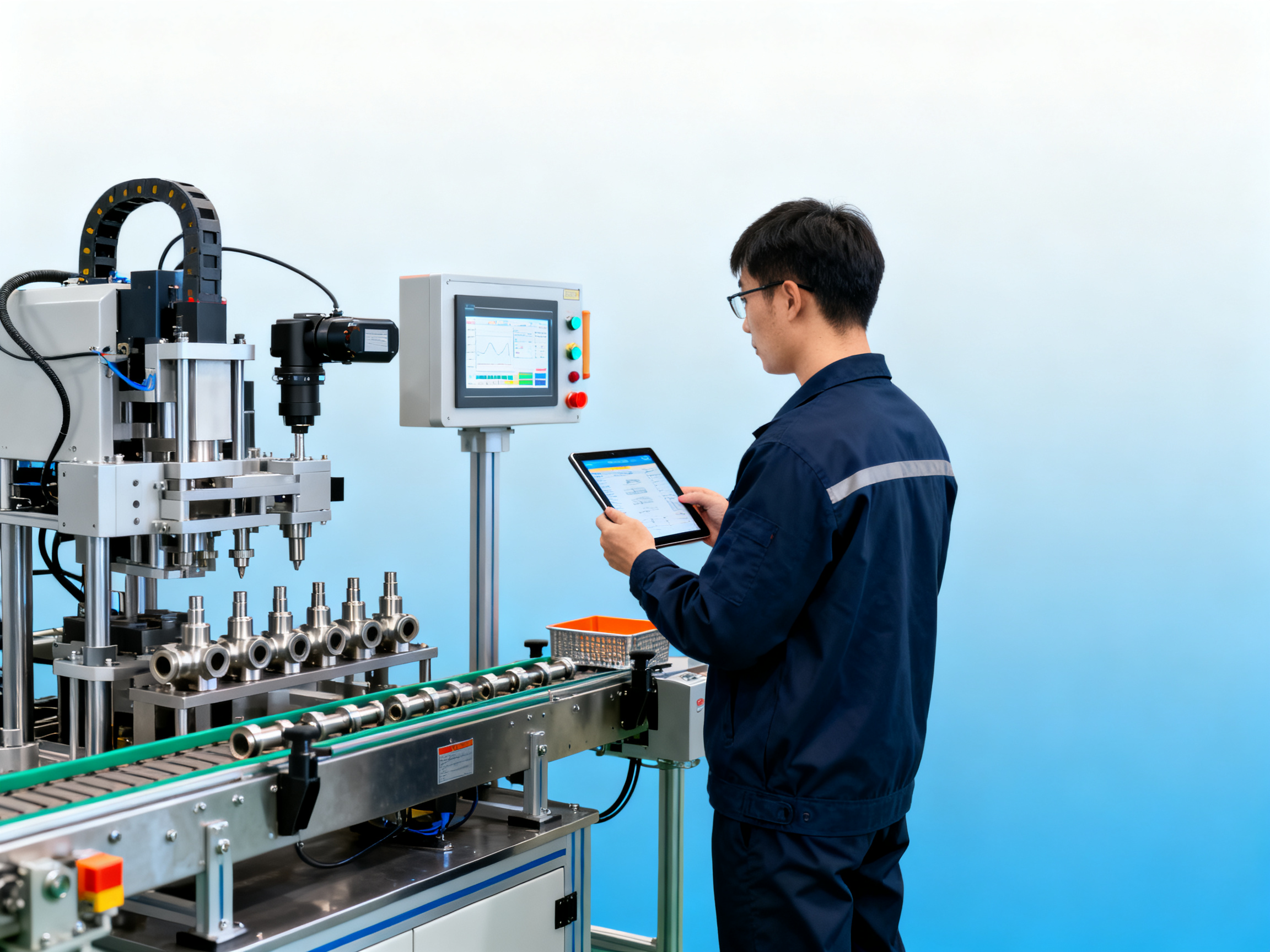
In this 2025 case study, Yuyao Zhiheng Automation’s high-speed valve assembly machines reduced cycle time by 40%, enabling procurement teams and executives to realize faster throughput and a clear ROI. Leveraging valve core automatic assembly machine technology and automated valve assembly equipment, the solution integrates valve assembly line machinery and valve assembly automation for consistent quality and lower labor costs. If you're evaluating valve switch assembly machine options or automatic valve assembly machines, this report outlines performance metrics, cost savings, and deployment insights to help decision-makers choose the right automated valve assembly solution. Beyond headline figures, the study explains how the high-speed valve assembly machines were configured, which process bottlenecks were targeted, and which change-management steps procurement and operations leaders must take to achieve a predictable payback. The description includes the role of a valve core automatic assembly machine in improving first-pass yield, the ways automated valve assembly equipment reduces manual handling, and how valve assembly line machinery integrates with upstream inspection and downstream packaging. Yuyao Zhiheng Automation Equipment Co.,Ltd is a manufacturer which established in 2010 and specializes in automation equipment for components such as solenoid valve components and sealing rings; their portfolio includes solenoid valve assembly machine, sealing ring automatic assembly machine, electric toothbrush automatic assembly machine, automotive air conditioning fan door actuators assembly lines, automatic screwing machine, automatic riveting contact machine and customized non-standard automated equipment. The manufacturer operates from Ningbo City in Zhejiang Province, near Ningbo Port and Shanghai Port, and exports automatic valve assembly machines and other systems to Europe, South America, the Middle East and Southeast Asia. This first paragraph sets context for procurement professionals and enterprise decision-makers: if you are tasked to compare a valve assembly automation project to a manual baseline, or to specify automated valve assembly equipment that can meet higher takt times, pay attention to the metrics and selection criteria that follow. The content that follows addresses definition, technical performance, market overview, a real 2025 case study and ROI table, procurement guidance, and final steps to contact the supplier for tailored automation solutions such as a valve switch assembly machine or an integrated valve assembly line machinery package.
Definition & Technical Overview: what valve assembly automation means in practice
Definition first: valve assembly automation refers to a suite of systems and machines—ranging from a single valve core automatic assembly machine to a full automated valve assembly equipment line—that perform repetitive assembly tasks with precision, speed and traceability. In practice, a valve core automatic assembly machine installs internal valve components such as spools, springs, seals and O-rings with force and positional control, while complementary equipment such as vision inspection, part feeding, automatic screwing machines and automatic riveting contact machines complete joins and verifications. Valve assembly line machinery integrates conveyors, buffer stations and automated testing so that high-speed valve assembly machines can sustain takt times that manual cells cannot match. Technical performance metrics for decision-makers include cycle time per assembled valve, mean time between failures (MTBF) for feeders and grippers, first-pass yield, repeatability in microns, and in-line test rates. Modern valve assembly automation employs PLCs, servo-driven axes, vision-guided pick-and-place, force-sensing insertion and IPC-class human-machine interfaces for recipe management and traceability. Compliance and quality systems are also part of the technical overview: many buyers specify ISO 9001 and IATF 16949-aligned processes for automotive-related valve assemblies, and CE marking or other region-specific certifications for exported automated valve assembly equipment. From a procurement perspective, technical due diligence should validate not only the machine cycle time claimed for a valve switch assembly machine, but also the part feeding reliability, changeover time between valve variants, spare parts lead time, integration with MES and last-mile packaging. High-speed valve assembly machines that reduce cycle time by 40% typically combine optimized part presentation, simultaneous multi-station assembly, and inline testing so that valve assembly line machinery sustains a higher throughput without compromising quality. For engineers and procurement specialists, evaluating the valve assembly automation architecture—centralized control, distributed I/O, communication protocols and safety zones—is as important as looking at headline takt numbers. A practical checklist includes cycle time validation, sample-run results, vision system resolution and programming flexibility, all of which influence total cost of ownership for automatic valve assembly machines.
Market Overview, Application Scenarios and Procurement Guide for buyers
Market context: demand for automated valve assembly equipment continues to grow as OEMs and contract manufacturers pursue higher throughput, predictable quality and lower labor dependency. Market drivers include electrification in automotive subsystems, greater complexity in HVAC and medical valves, and regional labor constraints that push buyers toward valve assembly automation. Application scenarios for valve assembly line machinery span solenoid valves for fluid control, HVAC actuator valves, miniature precision valves for medical devices, and automotive air conditioning fan door actuators. In each scenario, procurement personnel and enterprise decision-makers need to weigh lifecycle cost versus capital expenditure: an off-the-shelf valve switch assembly machine might be economical for high-volume, single-SKU runs, while a configurable valve core automatic assembly machine or a custom automatic valve assembly machines solution may deliver better long-term ROI for mixed-model production. When preparing a request for proposal (RFP) for automated valve assembly equipment, include the following procurement requirements in your scope: required cycle time per SKU, acceptable variation in part dimensions, expected uptime percentage, changeover procedures and time, integration points with MES and ERP, safety standards, footprint constraints, and service level agreements for spare parts and field support. Comparison analysis should measure manual cell throughput, semi-automatic workstations and a full automatic valve assembly machines line on common metrics such as throughput per shift, total labor hours saved, scrap rate reduction and payback period. Use pilot runs to validate claims: require vendors to demonstrate a valve assembly automation setup with your actual parts or validated engineering samples, because surface finishes, tolerances and elastic seals often change assembly dynamics. Cost considerations must include not just the purchase price of automated valve assembly equipment but also installation, commissioning, operator training, spare parts inventory and software licensing over the expected service life. Buyers should also evaluate the vendor’s proximity to key logistics hubs—Yuyao Zhiheng Automation’s location near Ningbo Port and Shanghai Port reduces freight lead time for exports and spares—plus the supplier’s track record exporting automatic valve assembly machines to Europe, South America, the Middle East and Southeast Asia. A robust procurement guide balances short-term CAPEX with long-term OPEX advantages delivered by a reliable valve assembly automation partner.
2025 Case Study, ROI Table, FAQs and Call to Action
Case summary: a mid-size valve manufacturer installed a line of high-speed valve assembly machines from Yuyao Zhiheng Automation in Q1 2025. Baseline cycle time for a critical solenoid valve was 22 seconds per assembled unit on manual lines. After deploying a valve core automatic assembly machine combined with automated valve assembly equipment stations for sealing ring insertion, automated screwing and inline electrical contact riveting, the measured cycle time dropped to 13 seconds per unit—a 40% reduction. Quality metrics improved: first-pass yield rose from 94% to 98.5%, and labor per 1,000 units fell by 3.2 full-time equivalents. The following validated table summarizes key metrics and estimated ROI figures for procurement review:
Common questions procurement teams ask are: how reproducible are cycle-time gains across variants? Answer: reproducibility depends on part geometry and feeder reliability; a valve switch assembly machine with flexible feeders and quick-change tooling typically maintains >90% of pilot gains across model families. What certifications does the vendor provide? Yuyao Zhiheng Automation supplies documentation for ISO-aligned quality processes and can facilitate CE and RoHS declarations as required for export. For buyers concerned about spare parts and training, the supplier offers local commissioning, operator training and remote support to reduce downtime risks. Why choose Yuyao Zhiheng Automation? The company combines a decade-plus manufacturing focus since 2010 on automation equipment, specialized product lines including solenoid valve assembly machine and sealing ring automatic assembly machine, and proximity to major ports for efficient logistics. Contact us to request a site demo, a shaped ROI estimate based on your SKUs, or a tailored specification for automatic valve assembly machines that meet your takt and quality targets. We sincerely look forward to cooperating with you—reach out to discuss a pilot project or to schedule a technical review and live trial of valve assembly automation solutions.News
▶ New Automated Tapping Line Enhances Switch and Terminal Block Production
▶ New Solenoid Valve Automation Line Sets Benchmark for Assembly Efficiency
▶ Automated Lipstick Case Line Cuts Complexity for Manufacturers
▶ Fully Automated Push Button Assembly Line: Unmatched Efficiency & Precision
▶ New Valve Automation Line Delivers Unmatched Efficiency and Ease of Operation
▶ Automated Damper Assembly Line Revolutionizes Automotive HVAC Production
Online Message
Thank you very much for writing to us. Please leave your message and contact information, we will reply to you within 24 hours.